
The DESSINART COLLECTION
Description
Title
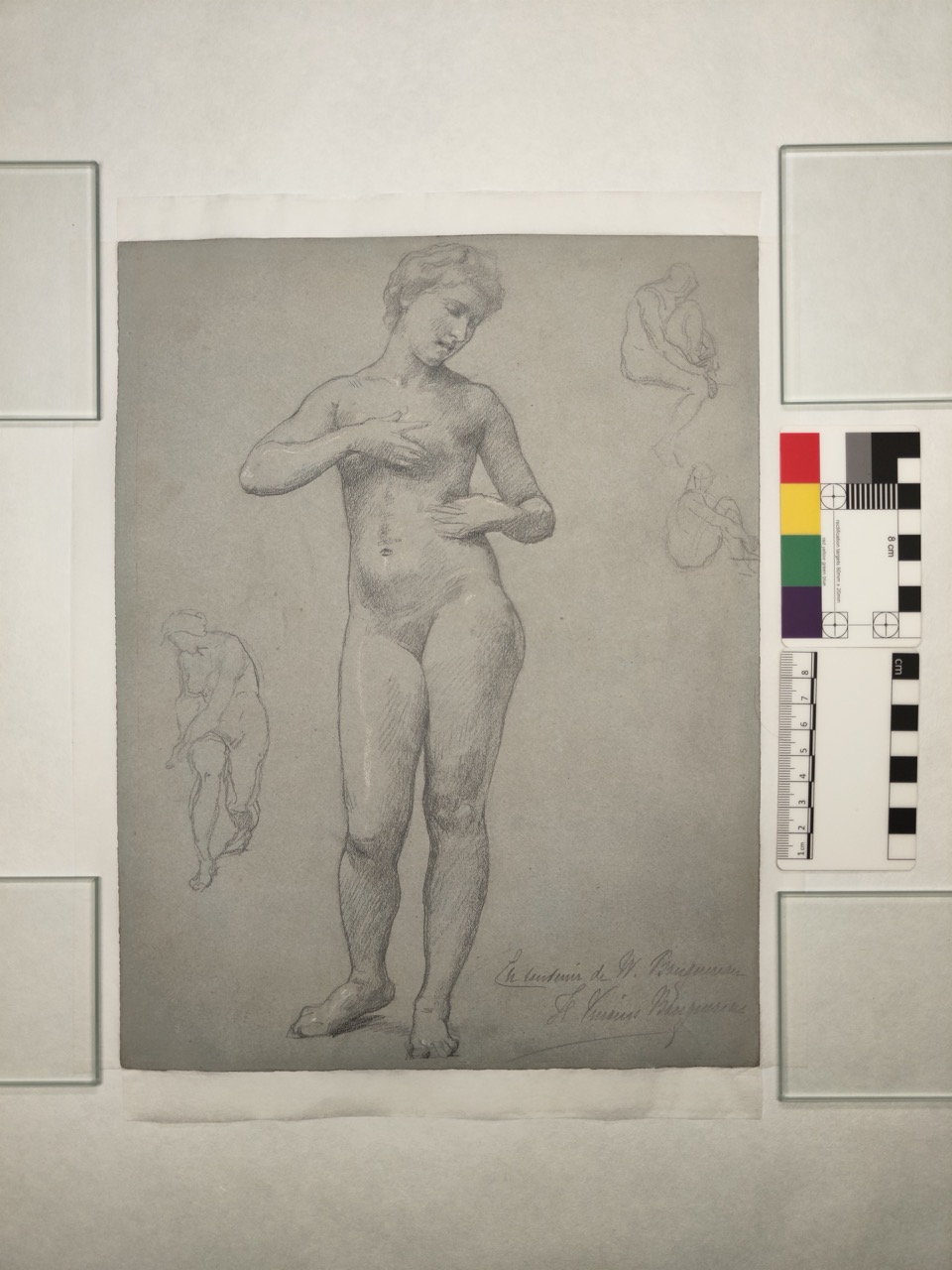
Étude pour Blessures d’amour
Attribution
William-Adolphe BOUGUEREAU
Medium
Graphite, heightened with white chalk
Dimensions
Sheet: L. 31,80 cm. | W. 24,0 cm.
Inscriptions
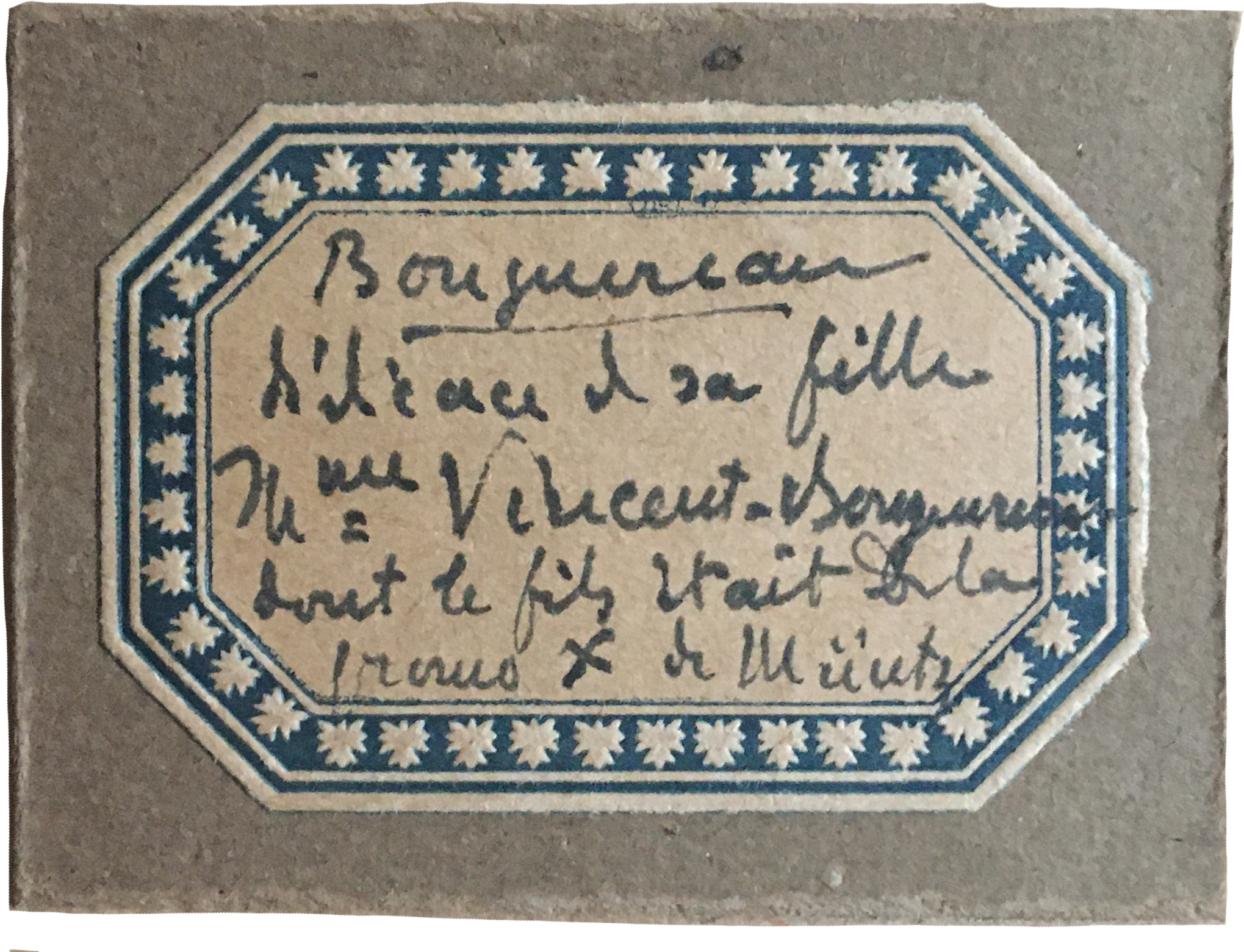
'En souvenir de W. Bouguerea' 'H. Vincens Bouguereau' (inscirbed lower right by Henriette Vincens Bouguereau 1857-1913) On the back of the work is a label that says 'Bouguereau, dédicace de sa fille, Madame Vincens-Bouguereau dont le fils était.....(Müntz)'. (Bouguereau, dedication by his daughter, Mrs. Vincens-Bouguereau). According to Mr. Bartoli, this work was given as a present to a certain Mr. Müntz, a classmate of William Bouguereau at Polytechnique School in Paris.
Documentation
Provenance
Müntz, given by Bouguereau; Lieu et date de la vente Estampes, Dessins et Tableaux, Objets d'Art, Argenterie, Mobilier chez Oger & Camper,Description du lot 71 , 2005; Mr. Geert de Caluwe Collection, Belgium Private Collection, acquired directly from above.; Asian Private Collection, acquired driectly from above.
Exhibition
Literature
Digital Archives
.jpg)
Technical Imaging
Visible Light
Visible Light imaging records the artwork under normal white light, corresponding to what the human eye can see. It is used to document the current visual appearance of the object, including colour, surface condition, losses, cracks, retouching, inscriptions, and other visible details.

Ultraviolet
Ultraviolet examination uses UV radiation to observe fluorescence on the surface of an artwork. It is commonly used to identify varnish layers, later retouching, restorations, overpaint, adhesives, and certain surface materials that may fluoresce differently from the original paint or support.
Infrared
Infrared imaging uses infrared radiation to penetrate certain paint layers and reveal features not visible in normal light. It is often used to study underdrawings, compositional changes, hidden inscriptions, earlier restorations, or carbon-based drawing materials beneath the surface.
X-Radiography
X-Radiography uses X-rays to examine the internal structure of an artwork. It can reveal the construction of the support, canvas weave, panel joins, nails, damages, previous repairs, dense pigments, hidden compositions, and changes made during the painting process.