
The DESSINART COLLECTION
Description
Title
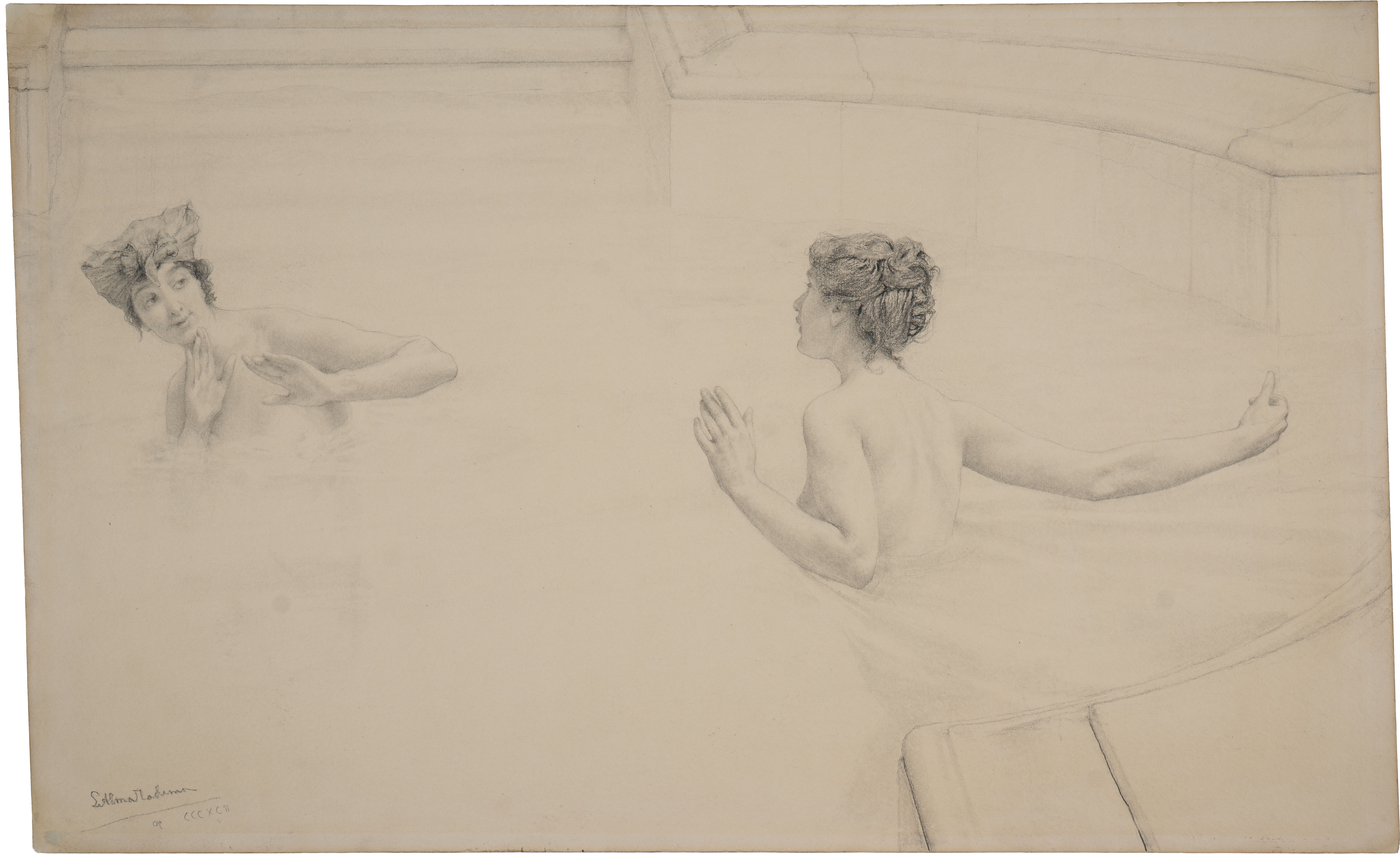
Splashing: the bathers
Attribution
SIR LAWRENCE ALMA -TADEMA, O.M., R.A.
Medium
pencil on paper
Dimensions
Sheet: L. 33,00 cm. | W. 53,20 cm.
Inscriptions
Documentation
Provenance
- The artist, by whom given in 1909 to Briton Riviere (†); - Christie's, London, 6 Dec 1920, lot 30 (14 gns to Sampson). - Mr & Mrs C. E. Calvert, Toronto, Canada by 1929. - Anonymous sale; Christie's, London, 16 December 2021, lot 68, where purchased by the present owner. - Property of a Lady; Christie's, London, 2 July 2025, lot 266, where purchased by the present owner.
Exhibition
- London, Royal Academy, Memorial Winter Exhibition, 1913, no. 74. - Toronto, Art Gallery of Toronto, October 1929, no. 101a (lent by Mr and Mrs C. E. Calvert).
Literature
- 'Pictures of the Year', Pall Mall Magazine (extra), 1909, p. 5, illustrated. - R. Dircks, The Later Work of Sir Lawrence Alma-Tadema, London, 1910, p. 32. - V.G. Swanson, The Biography and Catalogue Raisonné of the Paintings of Sir Lawrence Alma-Tadema, London, 1990, p. 272, under no. 422.
Digital Archives
Technical Imaging
Visible Light
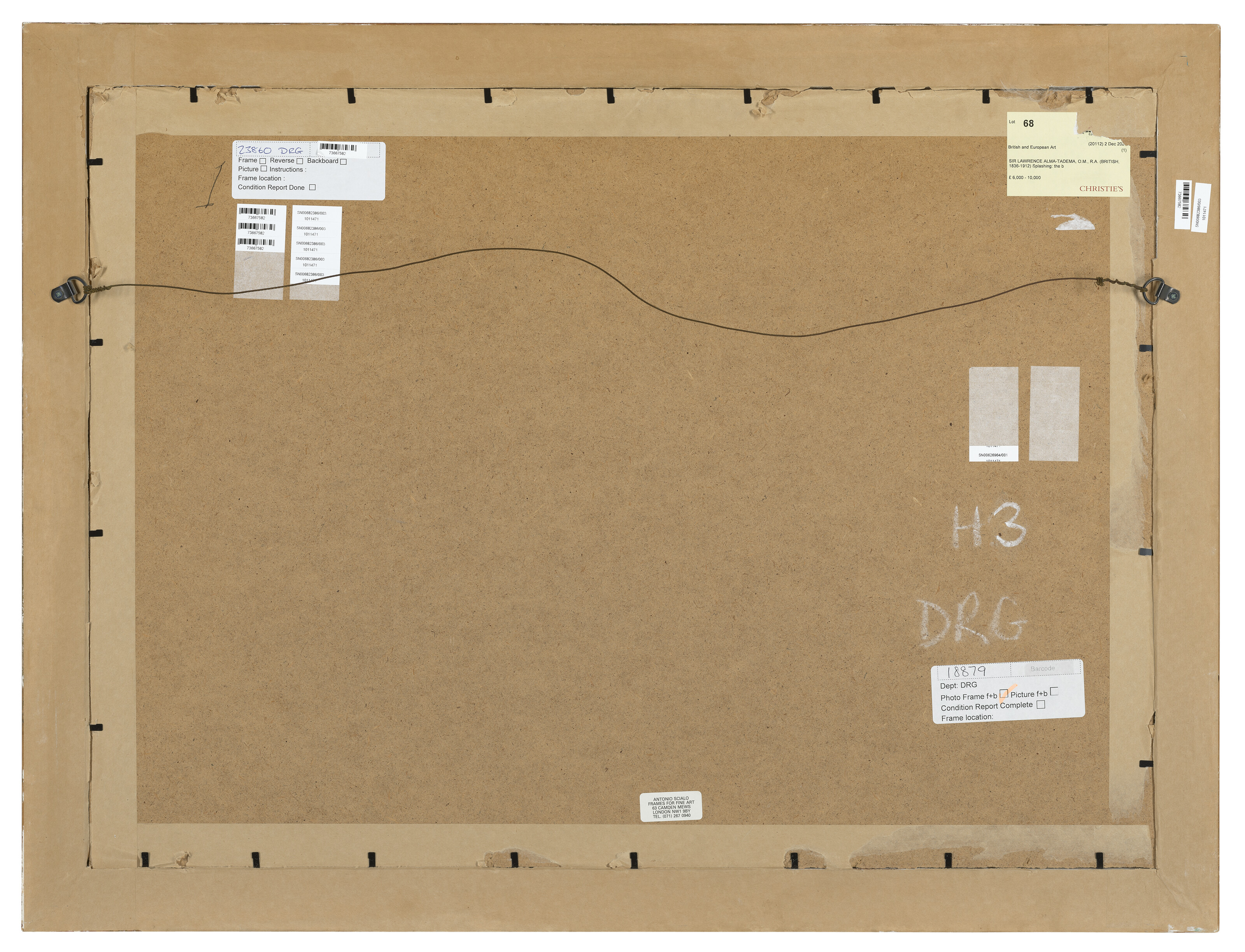
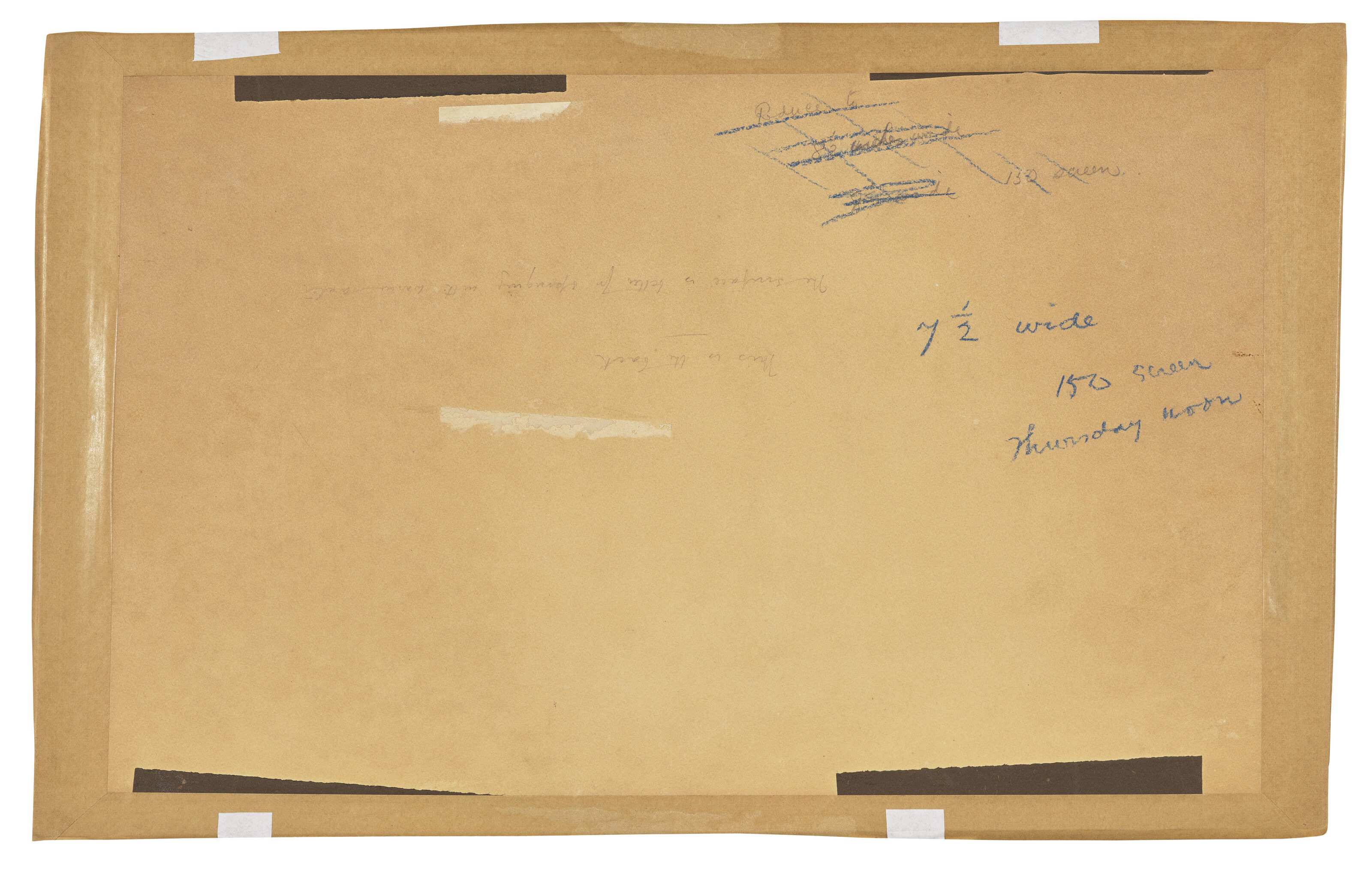
Visible Light imaging records the artwork under normal white light, corresponding to what the human eye can see. It is used to document the current visual appearance of the object, including colour, surface condition, losses, cracks, retouching, inscriptions, and other visible details.
Ultraviolet
Ultraviolet examination uses UV radiation to observe fluorescence on the surface of an artwork. It is commonly used to identify varnish layers, later retouching, restorations, overpaint, adhesives, and certain surface materials that may fluoresce differently from the original paint or support.

Infrared
Infrared imaging uses infrared radiation to penetrate certain paint layers and reveal features not visible in normal light. It is often used to study underdrawings, compositional changes, hidden inscriptions, earlier restorations, or carbon-based drawing materials beneath the surface.
X-Radiography
X-Radiography uses X-rays to examine the internal structure of an artwork. It can reveal the construction of the support, canvas weave, panel joins, nails, damages, previous repairs, dense pigments, hidden compositions, and changes made during the painting process.