
The DESSINART COLLECTION
Description
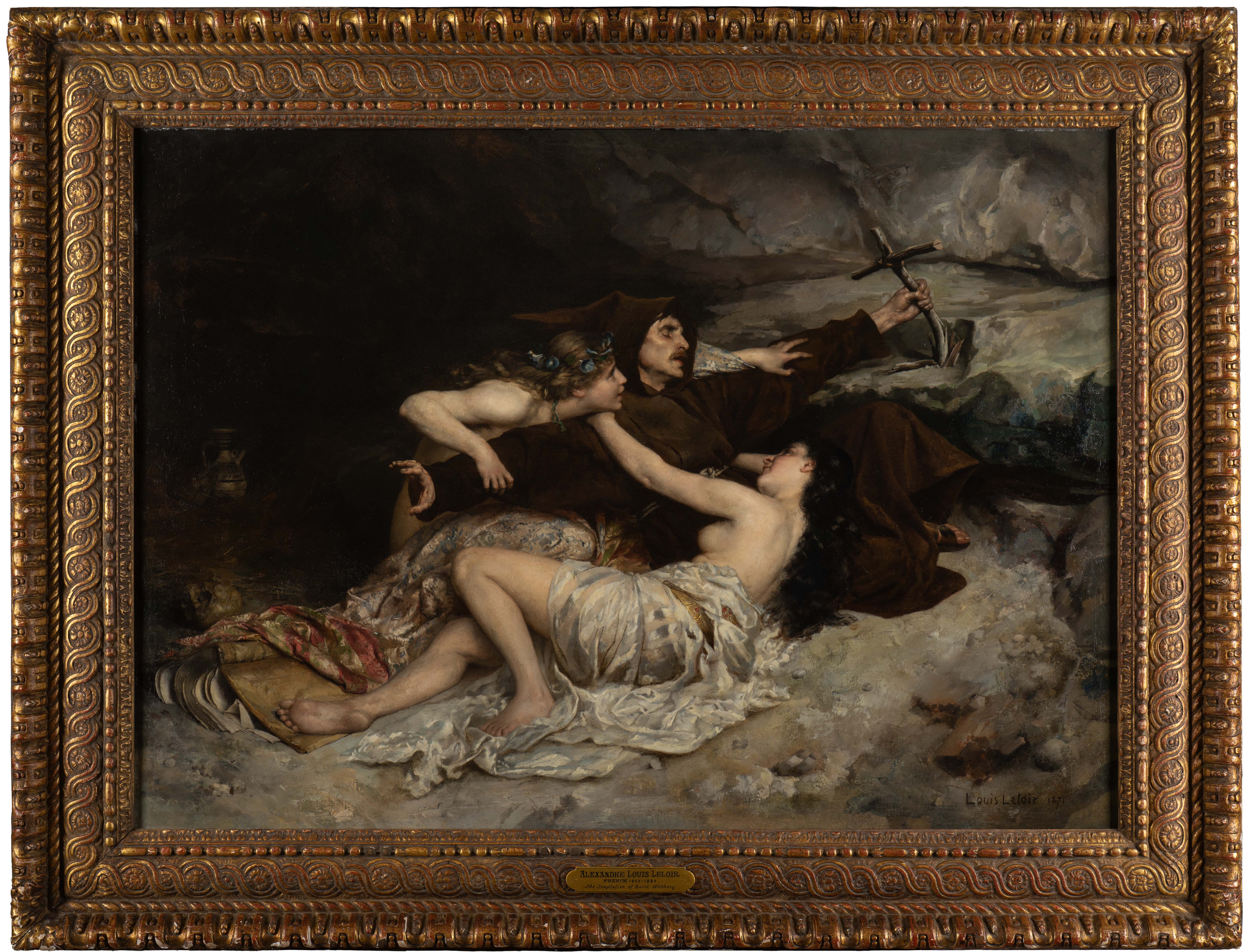
Title
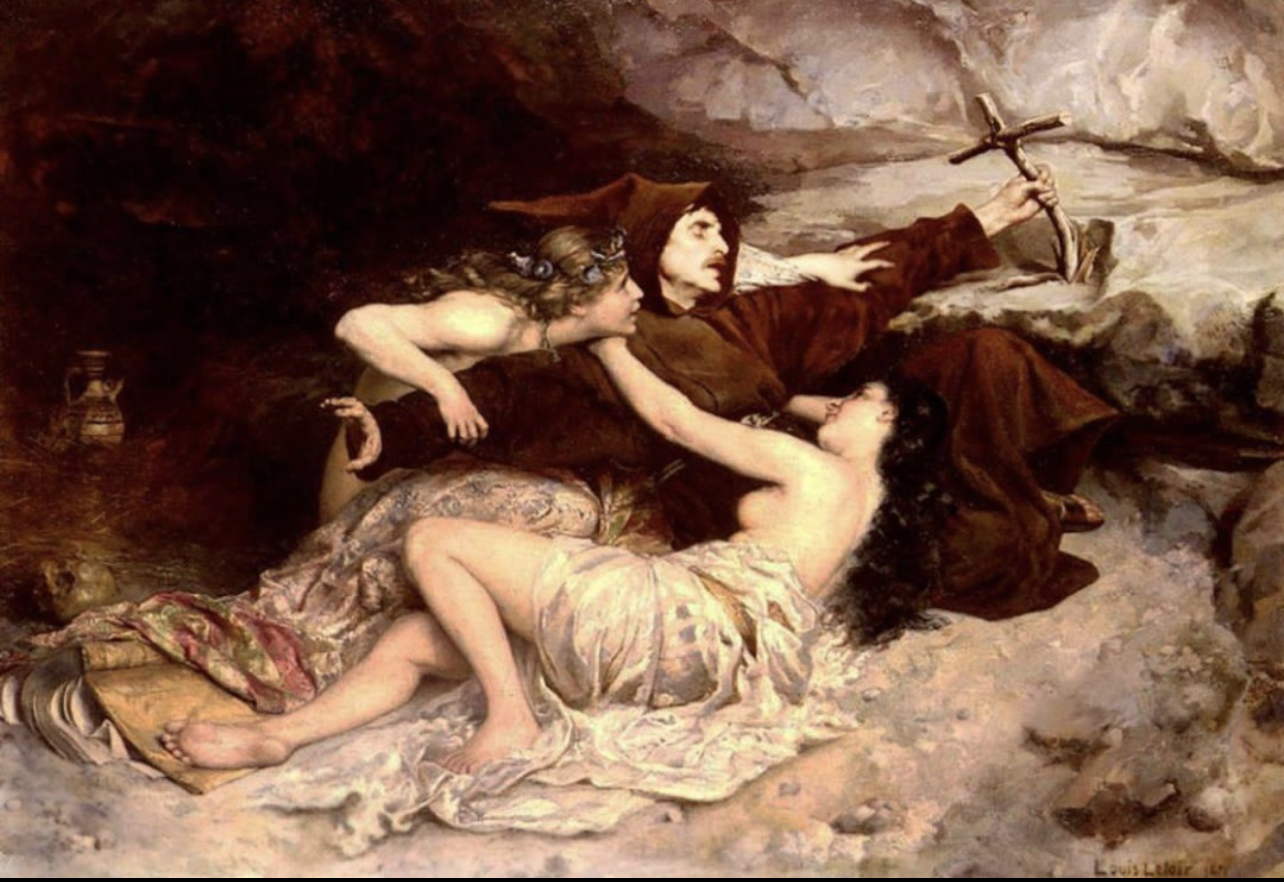
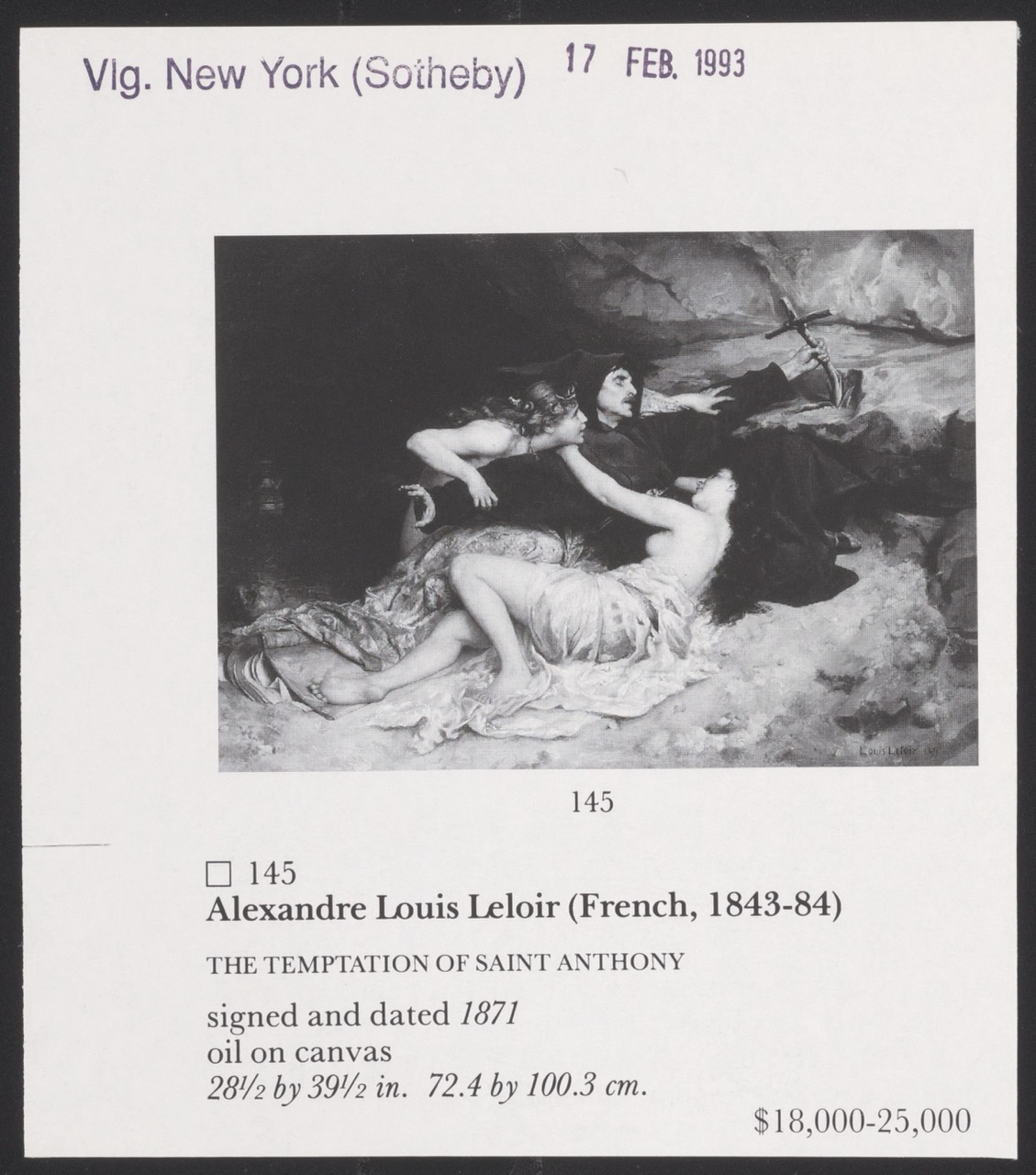
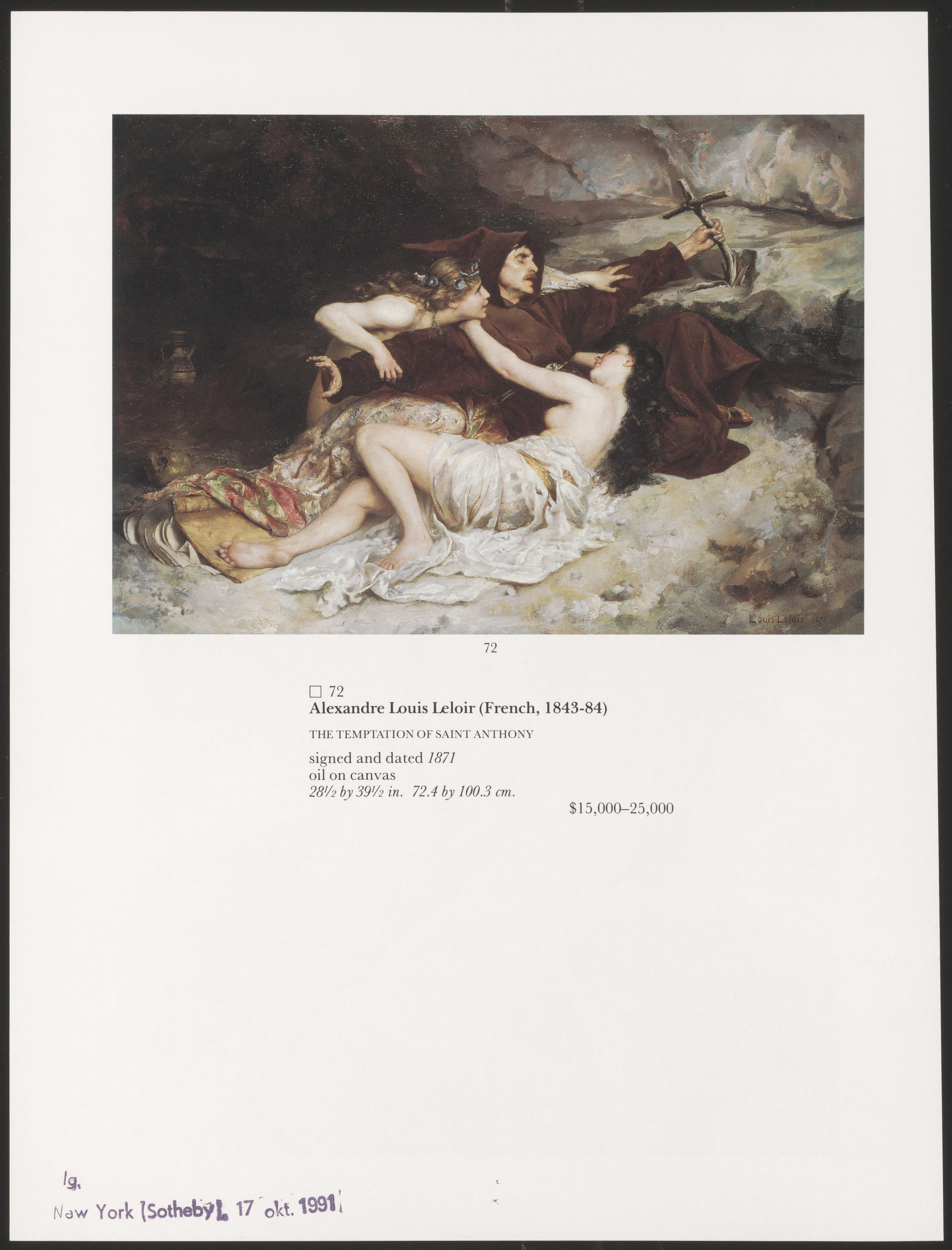
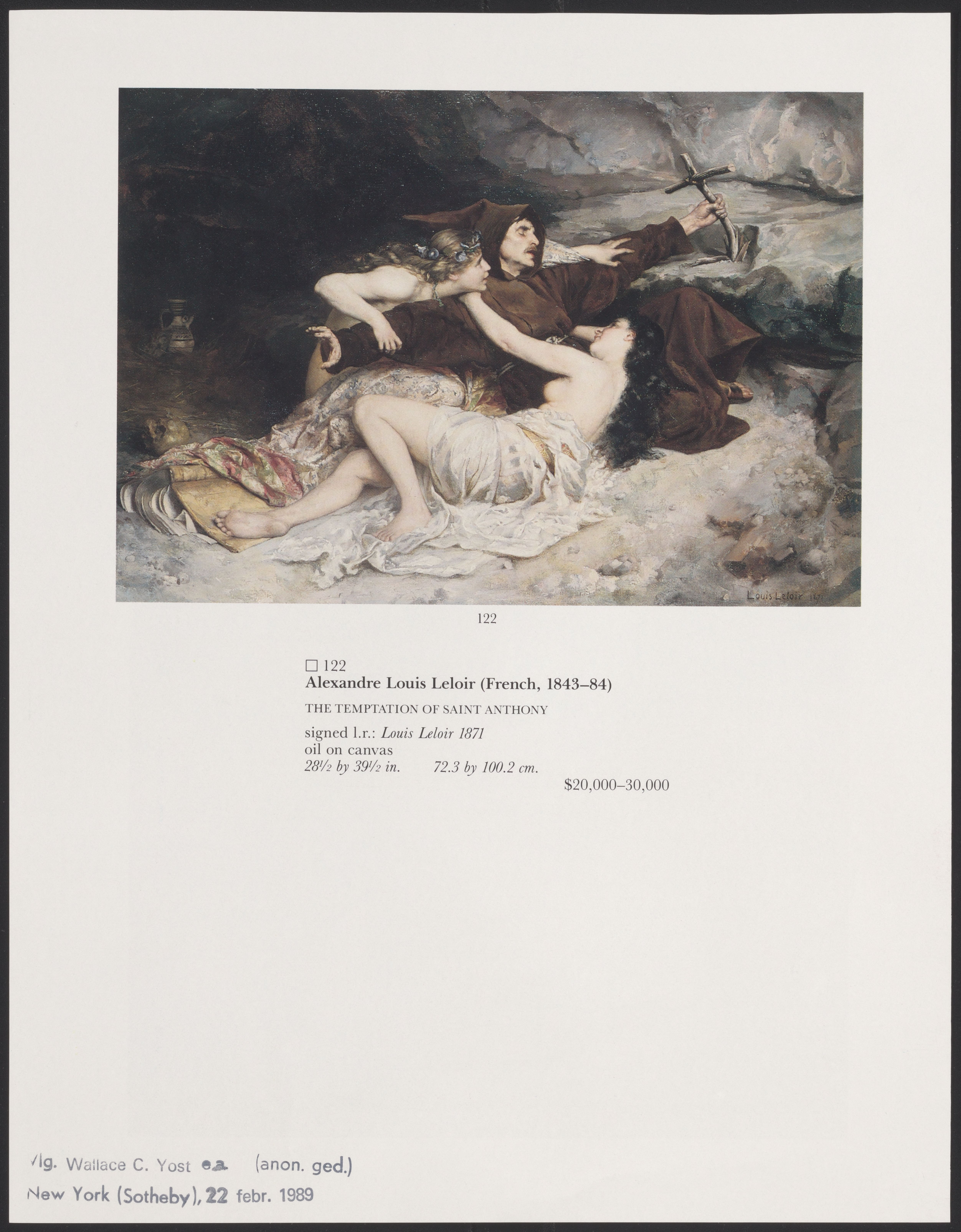
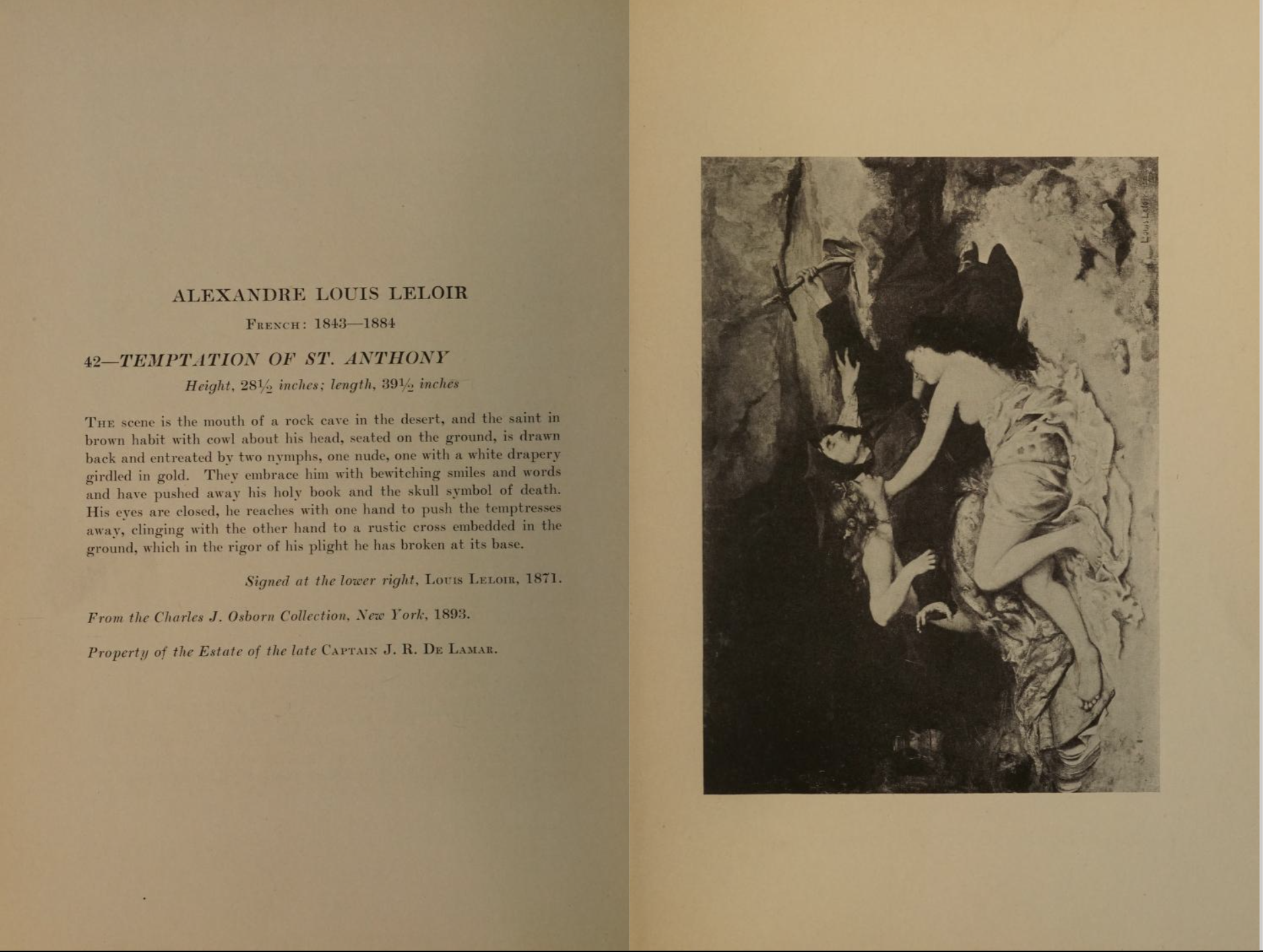
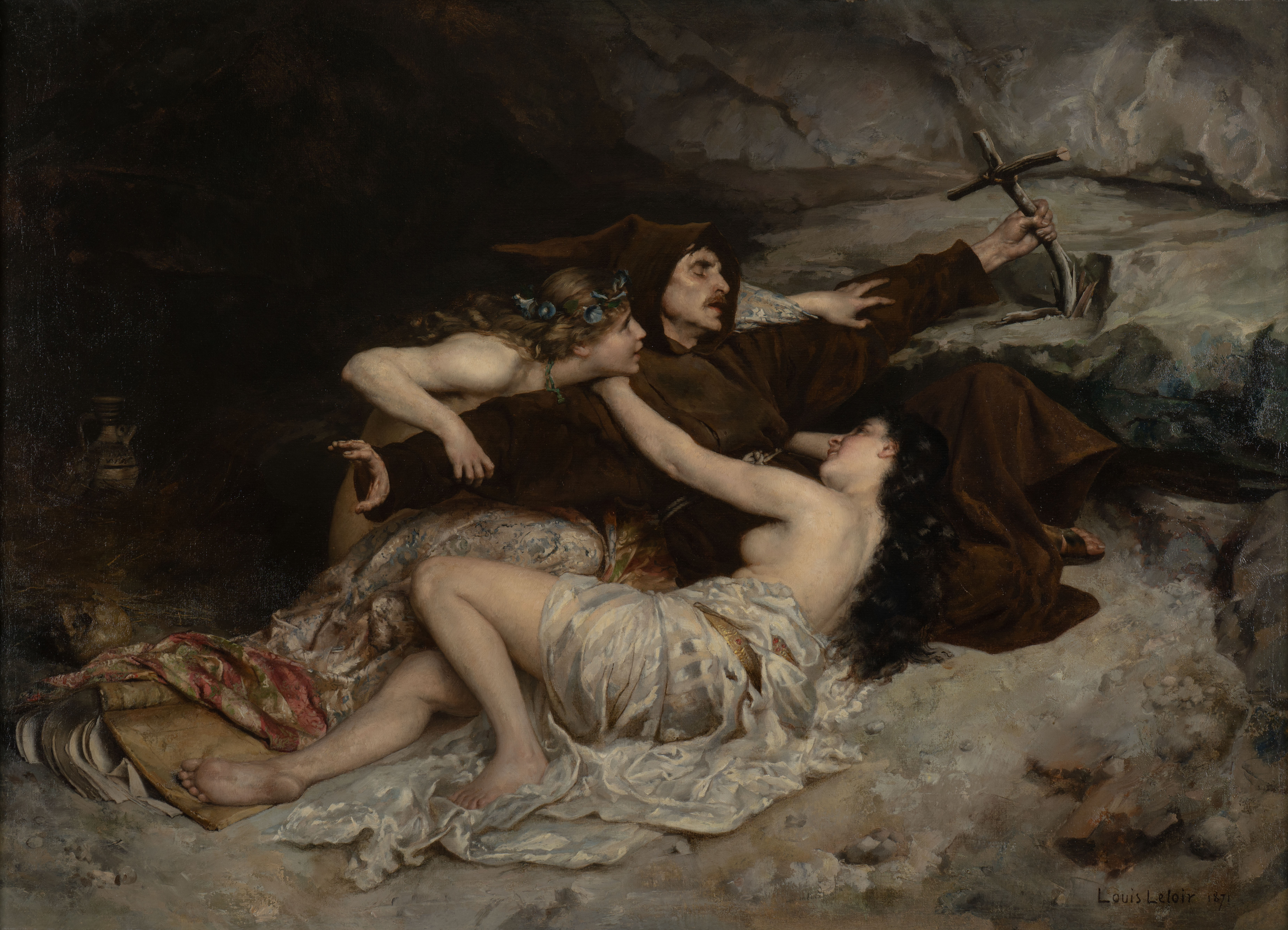
La Tentation de Saint Antoine
Attribution
Alexandre-Louis LELOIR
Medium
Oil on canvas-relined
Dimensions
Stretcher: L. 72,40 cm. | W. 100,30 cm.
Inscriptions
Signed and dated lower right in oil “L. Leloir 1871”
Documentation
Provenance
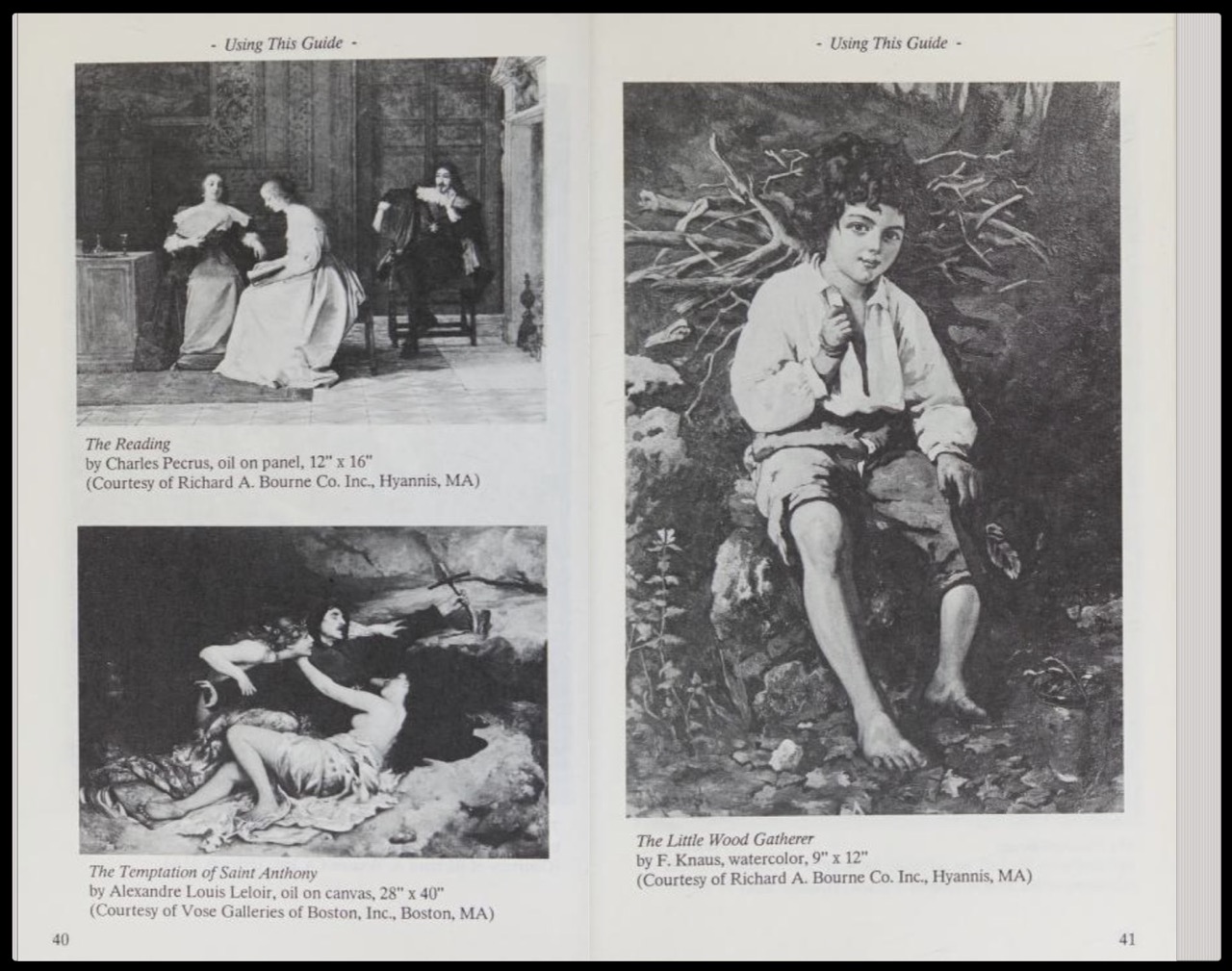
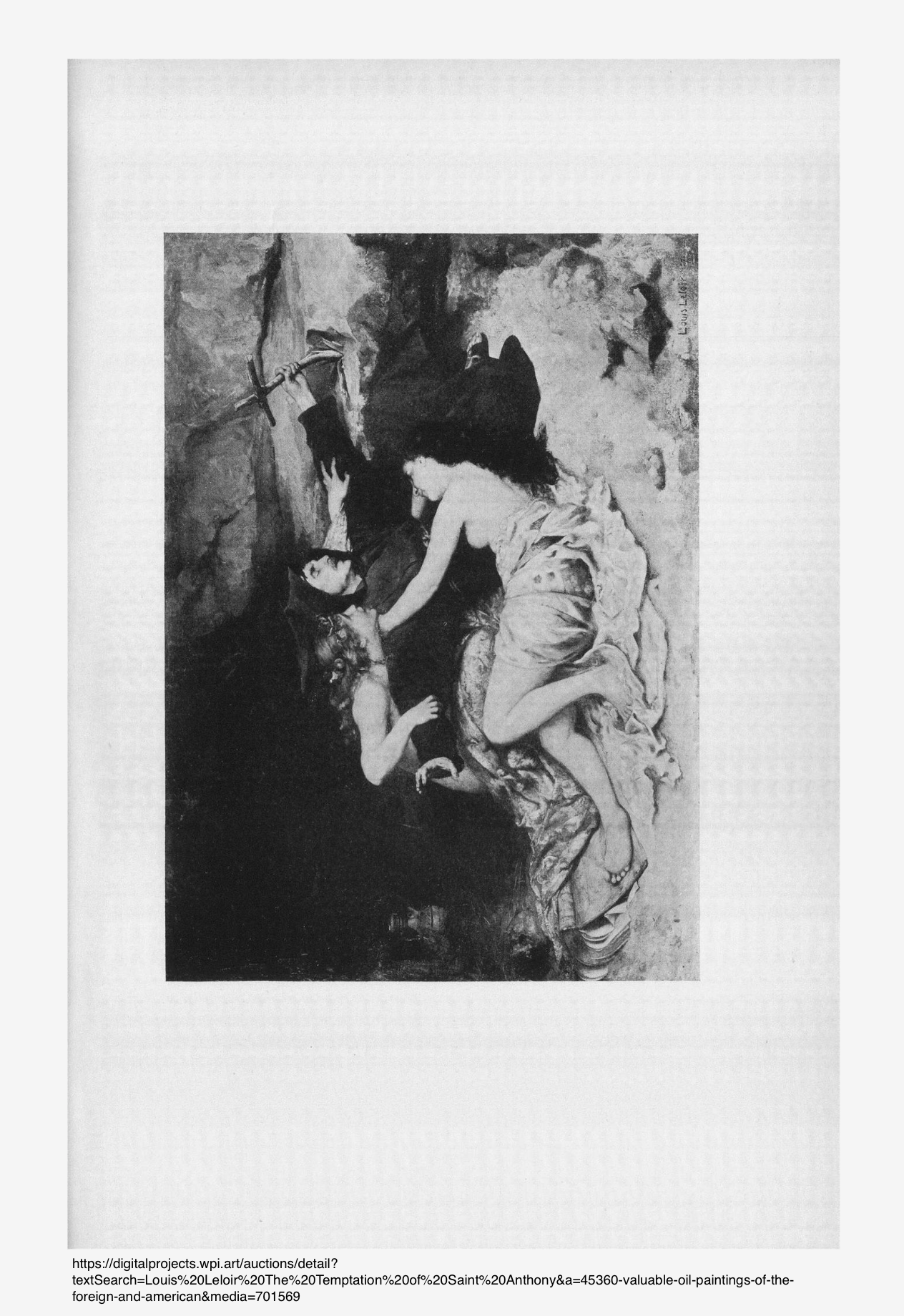
Collection of John Taylor Johnston (1832–1891); 2. Lot 185, Somerville Art Gallery, New York, 20 December 1876, Collection of Paintings, Drawings, and Statuary, the Property of John Taylor Johnston, sold for $2,100 to C. J. Osborne; 3. Collection of Charles J. Osborn (1839–1885); 4. Lot 81, American Art Galleries, New York, 27 January 1893, Catalogue of Modern Paintings Belonging to the Estate of the Late Charles J. Osborn, the Estate of the Late Edwin Thorne, and to Edwin S. Chapin, sold for $2,000 to J. R. De Lamar; 5. Collection of Captain J. R. De Lamar (1843–1918); 6. Lot 42, American Art Association, New York, 29 January 1920, Valuable Paintings Collected by the Late Captain J. R. De Lamar, property of the Estate of the Late Captain J. R. De Lamar, sold for $575 to W. C. Thompson; 7. Collection of W. C. Thompson (1889–1963); 8. Lot 499, Crown Art Galleries, New York, 12 November 1941, property from the home of Mr. Jules S. Bache; 9. Vose Galleries of Boston, Inc., Boston, MA, recorded in William T. Currier, Currier’s Price Guide to European Artists, 1545–1945, 1988, p. 40; 10. Collection of the American businessman Mr. Wallace C. Yost; 11. Lot 122, Sotheby’s, New York, 22 February 1989, Wallace C. Yost sale; 12. Lot 72, Sotheby’s, New York, 17 October 1991, anonymous sale; 13. Lot 145, Sotheby’s, New York, 17 February 1993.
Exhibition
New York, Metropolitan Museum of Art, New York Centennial Loan Exhibition of Paintings Selected from the Private Art Galleries, 23 June – 11 October 1876, no. 104, lent by / then in the collection of John Taylor Johnston, Esq.
Literature
Illus. p. 162, The Athenaeum, 3 February 1877, first paragraph illustrated: “The gallery of Mr. Taylor Johnston... Leloir, Temptation of St. Anthony, 2,100...”; Illus. p. 139, Joseph Brunard, Le recueil de l’art et de la curiosité, ou Revue des ventes publiques en 1875, 1876, 1877 et 1878, à Paris, Hôtel des commissaires-priseurs: de tableaux, dessins, sculptures, porcelaines et faïences anciennes, tapisseries, livres, vieux meubles et autres objets d’art et de curiosité, Paris, Hôtel Drouot, 1878, “Leloir: Tentation de Saint-Antoine. — 10500 fr.”; Illus. p. 57, Clara Erskine Clement Waters, Artists of the Nineteenth Century and Their Works: A Handbook Containing Two Thousand and Fifty Biographical Sketches, 1879; Photo published, lot 42, Valuable Paintings Collected by the Late Captain J. R. De Lamar, American Art Association, New York, January 1920; Photo published, p. 40, William T. Currier, Currier’s Price Guide to European Artists, 1545–1945, at Auction: Current Price Ranges on the Original Art of over 10,000 European Artists at Auction, 1988.
Digital Archives
Technical Imaging
Visible Light
Visible Light imaging records the artwork under normal white light, corresponding to what the human eye can see. It is used to document the current visual appearance of the object, including colour, surface condition, losses, cracks, retouching, inscriptions, and other visible details.

Ultraviolet
Ultraviolet examination uses UV radiation to observe fluorescence on the surface of an artwork. It is commonly used to identify varnish layers, later retouching, restorations, overpaint, adhesives, and certain surface materials that may fluoresce differently from the original paint or support.
Infrared
Infrared imaging uses infrared radiation to penetrate certain paint layers and reveal features not visible in normal light. It is often used to study underdrawings, compositional changes, hidden inscriptions, earlier restorations, or carbon-based drawing materials beneath the surface.
X-Radiography
X-Radiography uses X-rays to examine the internal structure of an artwork. It can reveal the construction of the support, canvas weave, panel joins, nails, damages, previous repairs, dense pigments, hidden compositions, and changes made during the painting process.