
Home / Rediscovered Masterpieces / Ferdinand Victor Léon Roybet

Collection Record
Identification
Collection Number: DS-19C-FR02
Current Title: Portrait of Juana Romani as Le Jeune Page
Former / Historical Title: Le Jeune Page (according to the 1913 Auction); Le Page (according to the label of the panel verso)
Sitter / Model: Juana Romani
Date: Late-19th Century-Early-20th Century
Century: Late-19th Century-Early-20th Century
Artist / Attribution
Artist: Ferdinand Victor Léon Roybet
Born date: 12 April 1840, Uzès, Gard, France
Died date: 11 April 1920, Paris, France
Attribution: Fully attributed to Ferdinand Victor Léon Roybet
School / Culture: French School
Movement / Artistic Context: Academic painting; nineteenth-century French historicist and costume painting
Materials and Techniques
Medium: Oil on panel
Support: Panel
Object Type: Painting
Dimensions: L. 81.0 cm. W. 64.4 cm. H. 1.2 cm.
Inscriptions: Signed on the front, upper right: “F. Roybet”.
Markings:
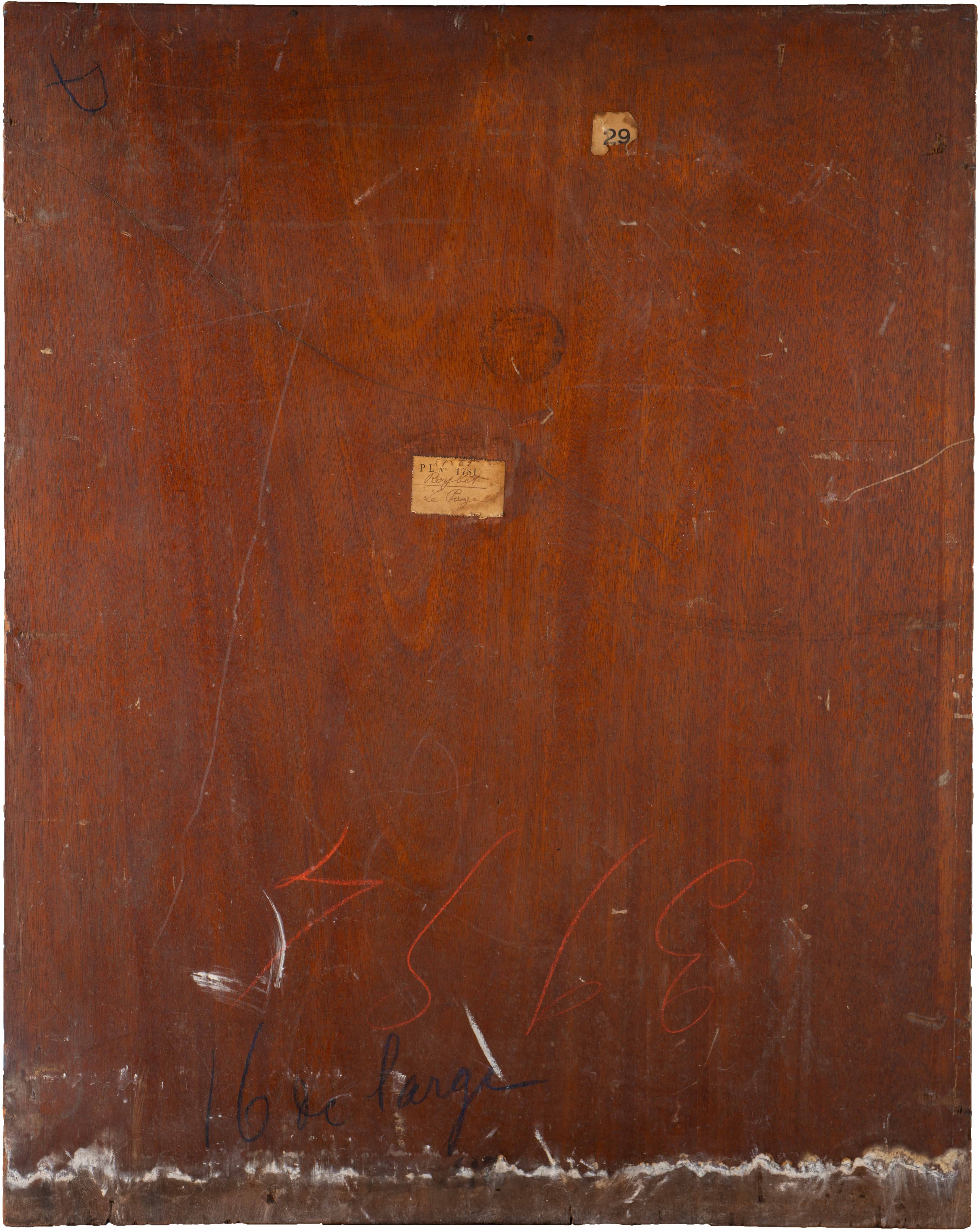
Reverse of panel bearing several historical labels and inscriptions. An old paper label at centre is printed and inscribed: “PL No. 1781”; annotated above with the dimensions “81 × 65”; further inscribed: “Roybet” and “Le Page”. A small numbered paper label “29” is affixed near the upper centre of the panel. Further reverse markings include large red chalk numerals, possibly “3468”, and blue crayon or pencil notation near the lower edge, partly illegible. Additional scratches, handling marks, and scattered graphite or chalk notations are present.
Collection Information
Department: Paintings
Classification: Oil painting
Acquisition Date: May 28, 2026
Acquisition Source: Richard MAISON DE VENTE AUX ENCHÈRES_28/05/2026_ACQUEREUR N° 132492_Ligne 49
Acquisition Context: Acquired by DESSINART in 2026 as part of its ongoing research into nineteenth-century French painting.
Conservation Status: Conservation treatment in progress.
Research Records
Provenance:
Georges C. Zervudachi, Alexandria, Egypt, by 1913;
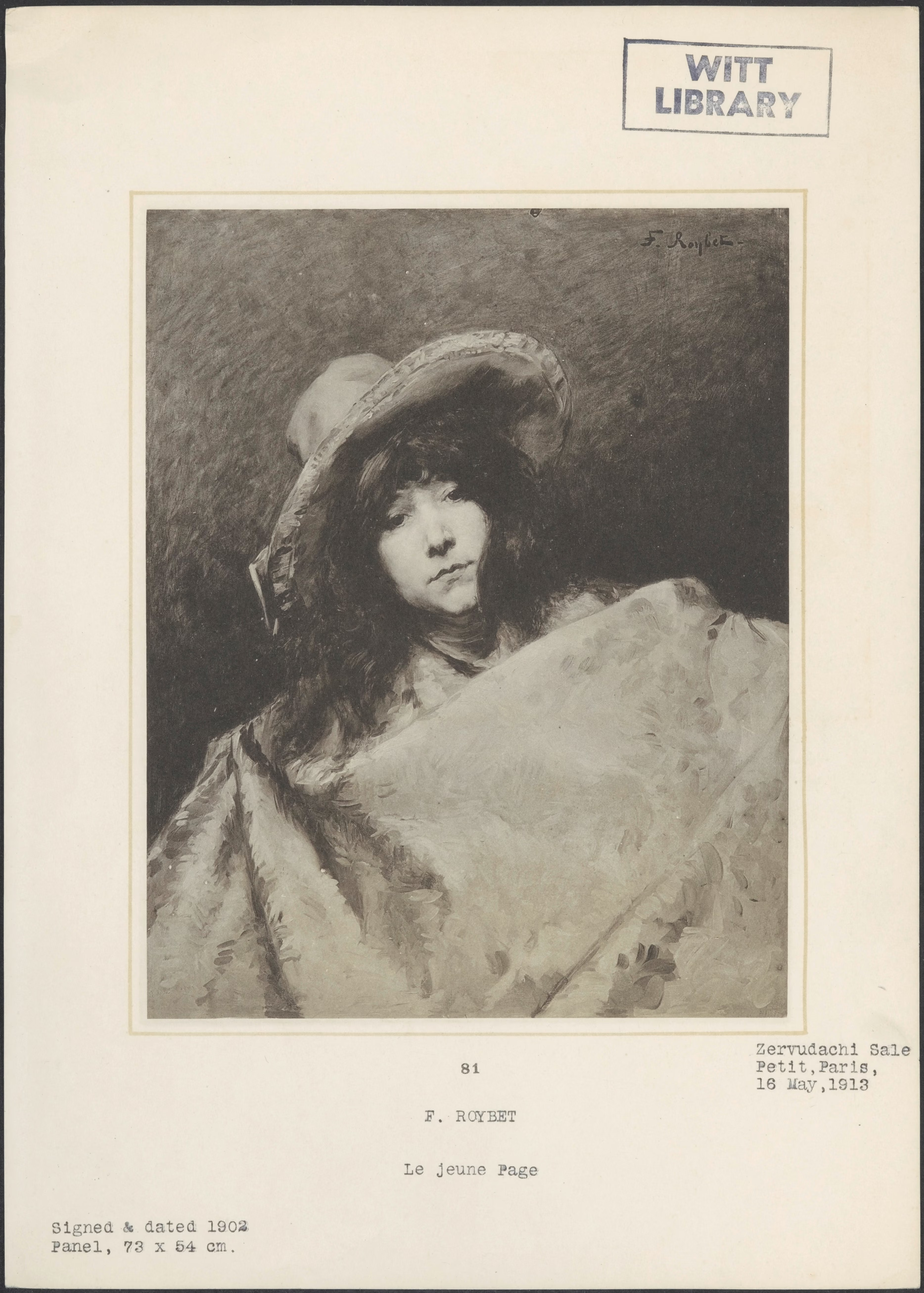
his sale, Collection Georges C. Zervudachi d’Alexandrie: Tableaux modernes, aquarelles, pastel, tableaux anciens, Galerie Georges Petit, Paris, 16 May 1913, lot 81, as Ferdinand Roybet, Le Jeune Page, oil on panel, signed upper right “F. Roybet”, 81 × 64.5 cm, illustrated in the catalogue; the catalogue description identifies the figure as resembling Mlle Juana Romani; annotated sale price 3,100 francs, buyer’s name possibly “Lintilhac”;
whereabouts unknown after the 1913 sale;
Richard, Maison de Vente aux Enchères, France, 28 May 2026, Acquéreur No. 132492, Ligne 49;
acquired by DESSINART from the above, June 2026.
Exhibition: Exhibition history under research.
Literature: Archival records under research.
Archival Records:
RKD – Netherlands Institute for Art History, RKDimages Lite, record no. 1378940, digital object no. 834099, as Ferdinand Roybet, Le Jeune Page.
Technical Imaging
Archival Records
.avif)
BIOGRAPHY - Ferdinand Victor Léon Roybet
Ferdinand Victor Léon Roybet was a French painter and engraver, born in Uzès in 1840 and active primarily in Paris. Trained first in Lyon and later associated with the Parisian art world, Roybet became known for his historical genre scenes, portraits, and richly staged figures in period costume. His painting often reflects a strong interest in the material culture of earlier centuries, including Renaissance and seventeenth-century dress, armour, textiles, and courtly interiors.
Roybet made his reputation at the Paris Salon during the 1860s and developed a highly recognizable artistic language based on historical costume, dramatic characterisation, and virtuoso handling of texture. His portraits and figure paintings frequently combine academic draftsmanship with a theatrical sense of identity, presenting sitters as historical, aristocratic, or literary types.
In the later nineteenth century, Roybet enjoyed considerable success among private collectors and international patrons. His work was exhibited at the Salon and circulated widely through the Parisian art market. He also painted a number of notable contemporaries, including artists, writers, military figures, and society patrons.
Awards and Honours
Salon medal, 1866;
Médaille d’honneur, Salon, 1893;
Chevalier de la Légion d’honneur, 1893;
Officier de la Légion d’honneur, 1900.
Museum collections
Musée d’Orsay, Paris;
Musée Roybet Fould, Courbevoie;
The Metropolitan Museum of Art, New York;
Art Institute of Chicago;
Saint Louis Art Museum;
Musée des Beaux-Arts, Lyon;
Musée des Beaux-Arts, Bordeaux;
Musée des Beaux-Arts, Rouen;
Musée des Beaux-Arts, Nantes;
Musée des Beaux-Arts, Lille;
Musée des Beaux-Arts, Reims;
and other public collections.
BIOGRAPHY - Juana Romani
Juana Romani, born Carolina Giovanna Carlesimo in Velletri, Italy, was an Italian-born artist who became active in Paris during the late nineteenth century. She first entered the Parisian artistic world as a model, posing for several leading artists before developing her own career as a painter. She studied with Ferdinand Roybet and Jean-Jacques Henner, two artists whose influence can be seen in her strong modelling of the figure, dramatic lighting, and preference for expressive female subjects.
Romani began exhibiting at the Salon of the Société des Artistes Français in the late 1880s and quickly established herself as a successful painter of female figures, portraits, and symbolic or historical subjects. Her paintings often present women as biblical, literary, theatrical, or aristocratic figures, combining sensuality, psychological presence, and richly coloured costume. Her sitters and heroines are frequently shown with dark or auburn hair, intense expressions, and a strongly staged visual identity.
Romani’s career is particularly significant because she moved from the role of artist’s model to that of an independent painter recognized in the Paris art world. Her connection with Roybet is therefore twofold: she was both his pupil and, on several occasions, a sitter or model for his portraits. In the case of Le Jeune Page, Roybet’s portrait presents Romani not simply as a likeness, but as a performative figure in historical costume.
Awards and Honours
Silver Medal, Exposition Universelle, Paris, 1889;
recorded as hors concours within the official Salon system.
Museum collections
Musée d’Orsay, Paris;
The John and Mable Ringling Museum of Art, Sarasota;
Musée Anne-de-Beaujeu, Moulins;
Musée de Velletri / Italian public collections, to be further verified;
and other public or archival collections.